Senate Advances SAVE America Act as GOP Pushes Election Bill Back to Floor
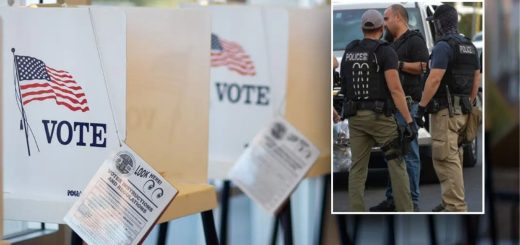
Senate Republicans recently moved the SAVE America Act forward, setting up a renewed legislative fight this week over election rules as GOP leaders signal the bill will be a top priority in the coming weeks.
The Senate voted 51–48 to advance the legislation last week by approving a motion to proceed, clearing a key procedural hurdle and allowing formal debate to begin. The measure now returns to the floor after previously stalling, with Sen. Mike Lee urging conservatives to maintain pressure on lawmakers to ensure final passage.
“Early next week, we’ll be taking up the SAVE America Act again,” Lee said, calling on supporters to stay engaged as the bill moves through the legislative process.
The proposal has also received strong backing from President Donald J. Trump, who has made election integrity a central issue of his second term. In a recent statement, the White House said the administration views the bill as a key part of its broader agenda on election security.
Supporters of the SAVE America Act say it is designed to strengthen confidence in federal elections by adding new requirements and oversight mechanisms. The bill would require proof of U.S. citizenship when registering to vote in federal elections, tighten voter identification rules, and expand federal involvement in maintaining voter rolls.
Republican lawmakers argue these changes are necessary to ensure that only eligible citizens participate in elections and to address concerns about how voter registration systems are managed. They also contend that such measures reflect widespread public support for stronger election safeguards.
The legislation has drawn opposition from Democrats, who argue that the proposed requirements could create barriers for certain groups of voters.
Critics say documentation rules may disproportionately affect individuals who do not have easy access to passports, birth certificates, or other forms of identification, including some rural residents, newly married voters, and first-time registrants.
The debate reflects a broader national divide over election policy, with Republicans emphasizing security and verification, while Democrats focus on access and potential barriers to participation.
Despite clearing the procedural vote, the bill faces a difficult path to final passage. Under current Senate rules, most legislation requires 60 votes to overcome a filibuster, meaning Republicans would likely need support from at least some Democrats unless procedural rules are changed.
Republican leaders have indicated they intend to hold an extended floor debate, a move that would keep attention on the issue and require senators from both parties to publicly take positions on the bill. Such a strategy could also be aimed at shaping the political narrative ahead of the 2026 midterm elections.
The vote was not entirely along party lines. Sen. Lisa Murkowski was the only Republican to vote against advancing the measure, highlighting some divisions within the GOP conference.
At the same time, the legislation has become a focal point for outside political pressure. Activist Scott Presler has publicly warned that failure to pass the bill could have electoral consequences for Republican incumbents. Presler has specifically targeted Sen. John Cornyn, pledging to support a primary challenge if the legislation does not move forward.
Cornyn, who is viewed as an ally of Senate Republican leadership, including Minority Leader John Thune, has not indicated a change in position but is expected to play a role in the bill’s legislative strategy.
The SAVE America Act is emerging as a key test of party unity and legislative priorities within the Republican conference. While the initial vote demonstrates enough support to bring the bill to the floor, maintaining that unity—and potentially expanding it—will be critical if the legislation is to advance further.
Regardless of the final outcome, the SAVE America Act is likely to remain a central issue in national politics, shaping campaign messaging and voter engagement as the 2026 election cycle approaches.